
Every state sets a legal time limit for filing nursing home abuse cases.
This deadline, called the statute of limitations, exists to encourage timely action. The sooner a case is filed, the easier it is to preserve evidence, gather witness statements, and uncover the truth. It also gives facilities a clear time frame for when legal claims can be brought against them.
In Arizona, you have two years to file a lawsuit against a nursing home for abuse, neglect, or wrongful death.
That two-year clock typically starts when the injury is discovered, or when it reasonably should have been.
Arizona law places strict deadlines on how long you have to take action. Miss that window, and you may lose your right to hold the nursing home accountable forever.
This post breaks down the statute of limitations for nursing home lawsuits in Arizona, what affects that timeline, and why taking early action matters more than you think.
The Statute of Limitations in Arizona for Nursing Home Abuse Lawsuits
In Arizona, the statute of limitations for filing a lawsuit related to nursing home abuse or neglect is generally two years from the date the injury occurred or was discovered.
This law applies to cases involving:
- Physical abuse
- Emotional or psychological abuse
- Sexual abuse
- Medical neglect
- Financial exploitation
- Wrongful death due to neglect or abuse
That two-year window is strict. If you try to file after the deadline, your case will almost certainly be dismissed, no matter how strong your evidence is.
Why Timing Matters in Nursing Home Abuse Cases
Nursing home abuse and neglect are often difficult to detect because victims may be too afraid, embarrassed, or cognitively impaired to speak up. In many cases, the truth doesn’t surface until weeks or even months of mistreatment have passed.
However, Arizona law does not allow unlimited time to take action. Once abuse is discovered, or reasonably should have been, the statute of limitations begins, and the clock starts ticking.
How Arizona Compares to Other States in Nursing Home Abuse Lawsuits
Every state sets its own statute of limitations for filing lawsuits related to nursing home abuse, and those timelines vary more than many families realize.
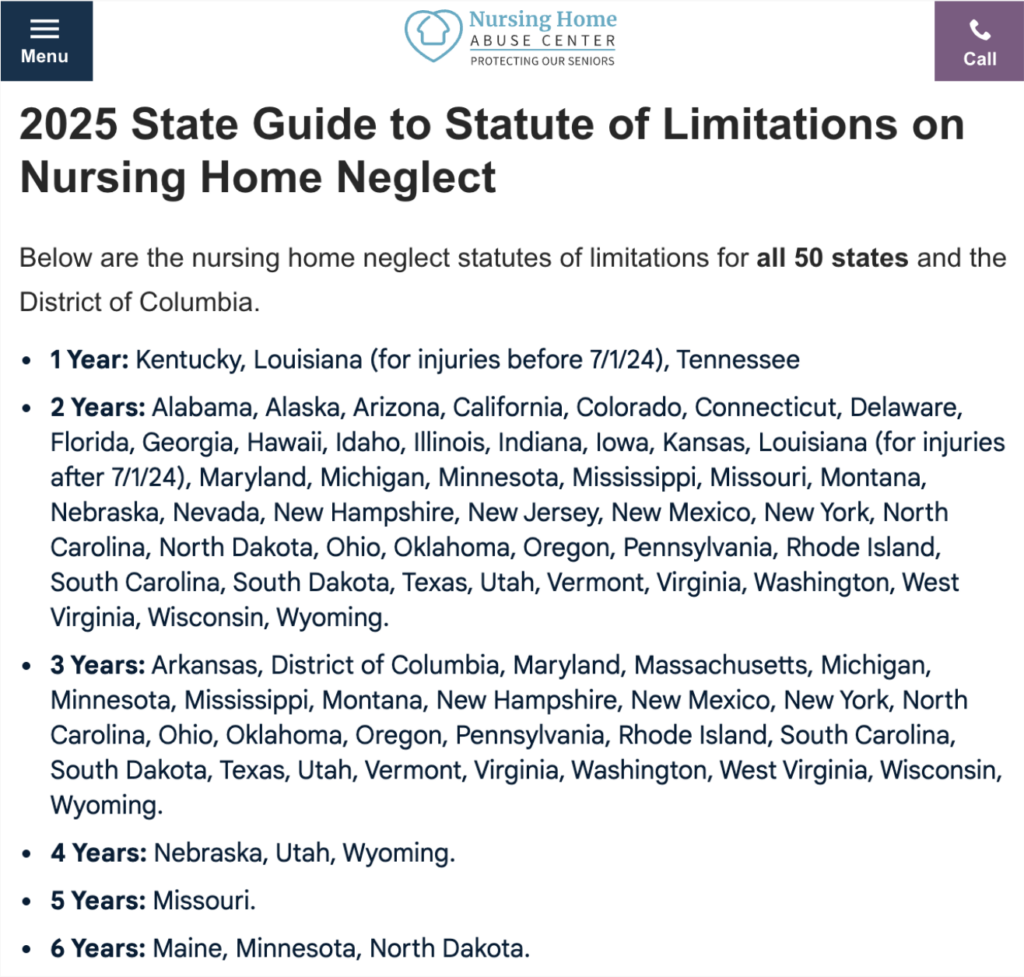
In California, families typically have two years to file a lawsuit for personal injury or wrongful death stemming from nursing home abuse. Arizona follows a similar two-year timeframe under its general personal injury statute.
In Illinois, the standard deadline for nursing home abuse or neglect is also two years. However, if the case involves medical malpractice, the law allows up to four years from the date of the incident, provided the injury wasn’t immediately discovered. This extended window is based on Illinois’s “discovery rule” and its statute of repose for malpractice claims.
Texas also imposes a two-year statute of limitations for these cases. Courts in Texas are known for strictly interpreting the timeline. This means the countdown typically starts as soon as the injury occurs or reasonably should have been discovered, even if the signs of abuse were not immediately apparent.
In New Mexico, families may face a significantly shorter timeline if the nursing home is operated by a government entity. Under the New Mexico Tort Claims Act, families must file a formal notice of claim within 90 days of the incident for general injury claims, and within six months for wrongful death cases. After providing notice, the actual lawsuit must still be filed within two years of the incident.
These differences highlight an important truth: the moment you suspect abuse or neglect, it is critical to consult a local attorney.
What protects a family in Illinois may not apply in New Mexico. Missing a legal deadline, even by a single day, can mean permanently losing the right to hold the nursing home accountable.
When Does the Two-Year Clock Start?
In many nursing home cases, figuring out when the clock starts can be tricky. Arizona uses what’s called the “discovery rule.” That means the statute of limitations begins when the victim (or their family) knew or should have known about the injury or neglect.
Let’s break that down with a few examples:
Obvious incident: If a resident suffers a broken hip due to a fall on July 1, 2023, and you are informed that day, the clock starts immediately. You have until July 1, 2025, to file a lawsuit.
Hidden injury: If a resident develops severe bedsores that go unnoticed until months later during a hospital visit, the clock may start from the date the injury was discovered, not when it first began.
Wrongful death: If a resident dies and abuse or neglect is only uncovered during an autopsy or investigation, the statute begins when that abuse is reasonably discovered.
Special Circumstances That Can Change the Deadline
There are rare cases where the statute of limitations might pause or “toll”. But these exceptions are narrow.
1. Mental Incapacity
If the resident is mentally incapacitated and cannot understand or act on the abuse, the deadline may be paused until a guardian or representative is appointed. However, once a responsible party is aware of the harm, the two-year limit usually starts.
2. Fraud or Concealment
If a nursing home actively hides what happened (for example, falsifying records or preventing witnesses from speaking out), a court may allow the filing period to extend. But proving concealment requires strong evidence and legal support.
3. Minor Plaintiff
In rare cases where a nursing home resident is a minor (such as a child with special needs in a long-term care facility), Arizona law typically delays the statute of limitations until the child turns 18. At that point, they would have two years to file.
What Happens if You Miss the Deadline?
Unfortunately, courts in Arizona rarely make exceptions to the two-year rule. If you try to file after the statute of limitations has passed:
- Your case will likely be dismissed immediately.
- You lose the chance to pursue compensation for pain, medical bills, or wrongful death.
- The nursing home escapes legal accountability.
Even worse, valuable evidence can disappear the longer you wait. Staff members move on. Surveillance footage is erased. Medical records get harder to access. The earlier you act, the stronger your case.
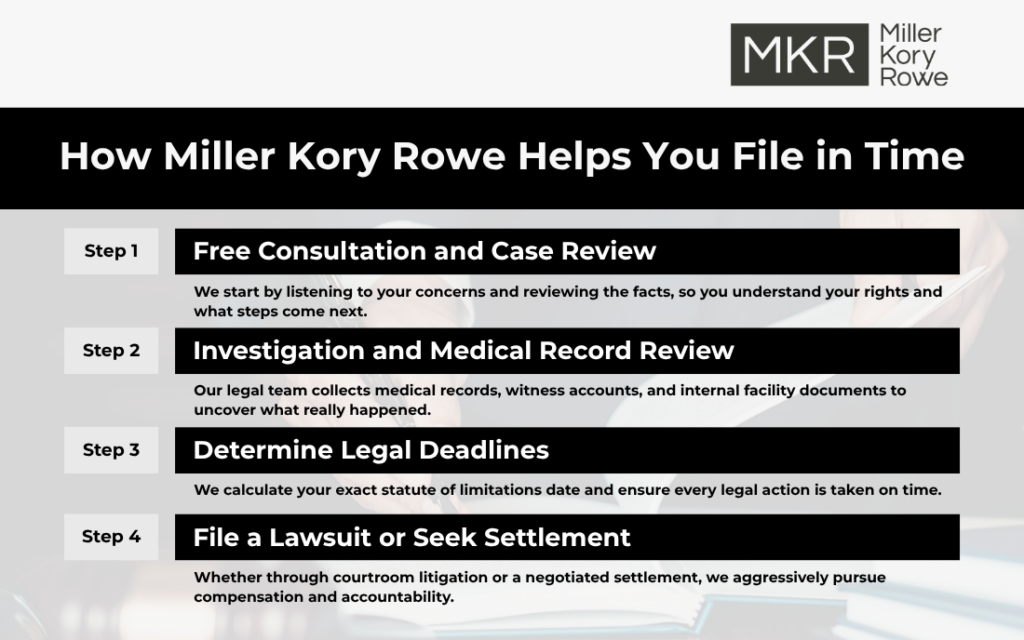
How Miller Kory Rowe Helps You File in Time
When you trust a nursing home to care for your loved one, you expect compassion, safety, and dignity. Your legal team should earn that same level of trust. That’s why Miller Kory Rowe brings together attorneys with backgrounds in engineering, elder law, and wrongful death litigation to fight for justice.
FAQs About Nursing Home Lawsuits in Arizona
Q: How do I know if I’m within the statute of limitations?
If less than two years have passed since the harm was discovered, you may still be within the deadline. But don’t wait. A lawyer can review your case and give you a firm timeline.
Q: What if the nursing home didn’t tell me about the abuse?
That’s common. Many facilities hide signs of neglect. Arizona’s discovery rule allows the timeline to start from when you learned or should have learned about the abuse—not necessarily when it happened.
Q: Can I sue a nursing home for neglect that caused my parent’s death?
Yes. Wrongful death cases are allowed under Arizona law. The statute of limitations is still two years, but it starts from the date the death was discovered to be caused by neglect.
Q: What if I’m not sure abuse occurred?
You can still speak with an attorney. We can help investigate and determine whether you have a valid claim. There’s no risk in asking.
Q: Does Arizona Adult Protective Services get involved?
They can. APS investigates suspected elder abuse and may issue reports that help your legal case. But they do not file lawsuits or seek financial compensation on your behalf.
Q: Can I sue even if my loved one is still in the nursing home?
Yes. In fact, many lawsuits begin while the resident is still there. Filing a suit may help get them transferred or trigger a deeper investigation into the facility.
Q: Are there Arizona-specific deadlines for claims against government-run nursing homes?
Yes. If the nursing home is run by a government agency, you may need to file a “notice of claim” within 180 days under Arizona’s Tort Claims Act. These deadlines are much shorter and more complex. Legal advice is essential in these cases.
Bottom Line
Arizona gives you just two years to file a lawsuit against a nursing home for abuse or neglect. That time can disappear quickly, especially when injuries are hidden or denied by staff. But you’re not powerless. By acting early, preserving evidence, and speaking with a skilled Arizona elder law attorney, you can protect your loved one and seek the justice they deserve.
Need help navigating a nursing home abuse case? The attorneys at Miller Kory Rowe offer skilled, compassionate support right here in Arizona. Reach out today.