
When a loved one moves into a nursing home, families often focus on care routines, medical needs, and daily comfort. What’s less visible, but just as important, is how residents move through their environment and how easily disorientation can lead someone to leave without realizing the risk.
Elopement occurs when a nursing home resident leaves the facility without staff awareness.
This can happen at any time of day and often unfolds quietly, without obvious warning signs.
Many residents who elope are not trying to escape or act out. Instead, they are responding to confusion, memory loss, or an internal sense that they need to be somewhere else.
What Elopement Means in a Nursing Home Setting
In long-term care, elopement refers to a resident leaving the building or secured area without notifying staff. A resident may exit through a door, wander through a common area, or follow a familiar path that feels safe to them.
Elopement can be intentional or unintentional. Some residents believe they are going home, going to work, or looking for a family member. Others may not recognize that they are leaving the facility at all.
Why Residents Leave Without Realizing the Risk
Elopement most often involves residents with cognitive conditions that affect judgment and awareness. Dementia and Alzheimer’s disease can alter how a person understands their surroundings, even in a place they have lived for months or years.
A resident may:
- Feel a strong need to go somewhere familiar
- Become disoriented by changes in routine
- Misinterpret time, such as believing it is morning or evening
- Follow another person without understanding where they are going
To the resident, the decision to leave can feel logical and necessary.
Environmental Factors That Can Contribute
Nursing homes are active environments with constant movement. Doors open for visitors, deliveries, and daily operations. Hallways may lead outdoors, and common areas often connect to courtyards or parking spaces.
Elopement can occur during:
- Shift changes or busy periods
- Mealtimes or group activities
- Moments when multiple doors are in use
- Transitions between rooms or units
These everyday moments can create opportunities for a resident to wander without drawing attention.
The Role of Routine and Familiarity
Residents often follow patterns based on past habits. Someone who spent decades going to work each morning may feel compelled to leave at the same time every day. Others may respond to environmental cues like sunlight, noise, or seeing people come and go.
This behavior is not unusual. It reflects how deeply ingrained routines remain, even as memory changes.
Preventive Measures That Can Reduce Elopement Risk
Elopement often stems from confusion, routine, and changes in cognition, but thoughtful planning can help reduce the risk. Prevention focuses on awareness, consistency, and care approaches tailored to each resident’s needs.
These measures support safer movement within the facility while respecting a resident’s dignity and independence.
Arizona Law and Resident Safety
Arizona law sets basic safety standards for nursing homes and assisted living facilities, recognizing that some residents face higher risks due to memory loss, confusion, or limited mobility. Licensed facilities are expected to maintain environments that support resident well-being through monitoring, safety planning, and individualized service plans.
These requirements are overseen by the Arizona Department of Health Services, which establishes licensing rules focused on both protection and dignity. Understanding this framework helps families see how safety measures and care planning work together to reduce risks like elopement while respecting a resident’s independence.
How to Protect a Loved One at Risk of Elopement in Arizona
Families play an important role in supporting the safety of loved ones who may be at risk of elopement. Changes in memory, behavior, or routine often happen gradually, and family members are often the first to notice when something feels different.
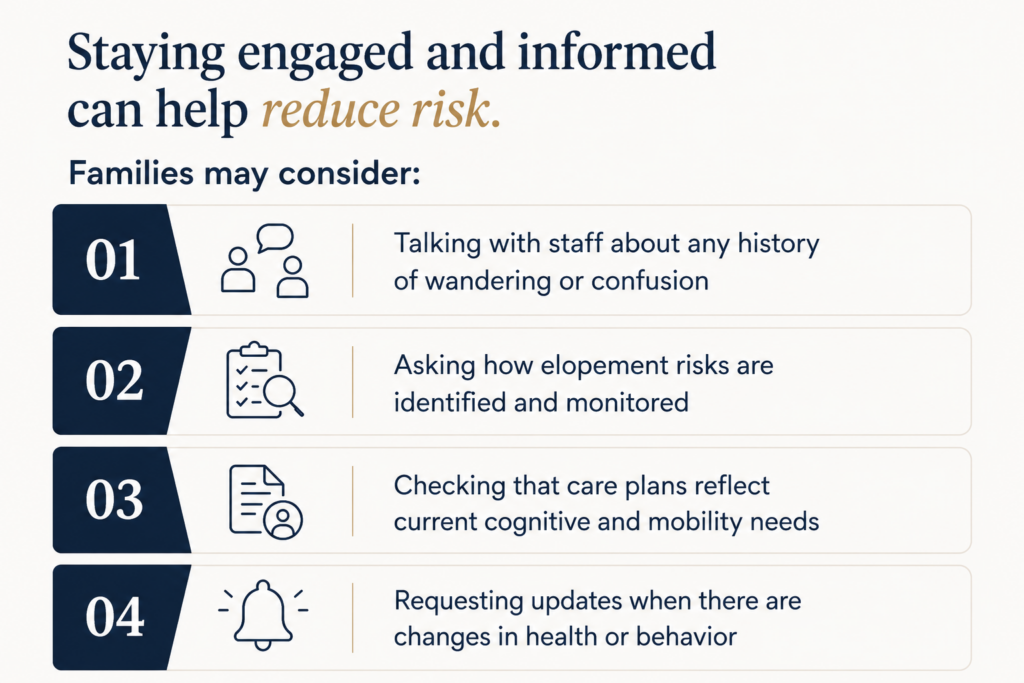
Staying engaged and informed can help reduce risk. Families may consider:
- Talking with staff about any history of wandering or confusion
- Asking how elopement risks are identified and monitored
- Checking that care plans reflect current cognitive and mobility needs
- Requesting updates when there are changes in health or behavior
For families, elopement can be frightening because a resident may not recognize danger, ask for help, or find their way back. Even short periods outside the facility can feel overwhelming once families learn what happened.
Understanding how elopement occurs helps families ask informed questions, stay aware of risk factors, and better understand the experiences of loved ones living with cognitive decline.
When Elopement Becomes Abuse or Neglect
In some situations, repeated or preventable elopement may raise concerns beyond confusion or wandering.
Elopement can cross into abuse or neglect when a resident’s known risks are not addressed in a meaningful way. This may include cases where a resident has a documented history of wandering, cognitive impairment, or prior elopement incidents, yet safeguards or supervision are not adjusted as those risks become clearer.
Concerns may also arise when elopement results in serious harm, a prolonged absence, or exposure to dangerous conditions, particularly when warning signs were present beforehand.
Understanding this distinction helps families recognize when elopement is an isolated event and when it signals deeper care concerns.
How Miller Kory Rowe Can Help After Nursing Home Elopement in Arizona

When abuse or neglect may be involved, certain legal considerations often come into focus, including:
- Whether the facility provided a safe environment appropriate to the resident’s needs
- Whether residents with known wandering risks were adequately monitored
- Whether care plans and supervision levels were updated after prior incidents or changes in condition
When a facility fails to meet these responsibilities, it may be held accountable for the harm that follows.
Miller Kory Rowe represents families in these situations, helping them understand what went wrong, what protections should have been in place, and how to safeguard their loved one’s well-being moving forward.