
When a loved one dies after receiving hospital care, the grief is often accompanied by painful questions. Was this outcome unavoidable? Could better decisions or proper care have prevented the death? Should the hospital be held accountable?
These questions matter because not every tragic outcome leads to the same type of legal claim. In Arizona, families may have grounds for a medical malpractice claim, a wrongful death claim, or both, depending on the circumstances.
Understanding the difference can help you make informed decisions during an incredibly difficult time. While no legal action can replace the person you lost, pursuing the right claim can provide financial security, accountability, and answers that may prevent similar harm to others.
Understanding Hospital Mismanagement
Hospitals are expected to provide care that meets accepted medical standards.
Patients trust doctors, nurses, specialists, and hospital staff to communicate effectively, follow established safety procedures, and make sound medical decisions.
Hospital mismanagement happens when failures within the hospital contribute to patient harm. These failures often involve more than one individual and may reflect larger breakdowns in hospital systems, policies, or oversight.
Examples include:
- Delayed diagnosis or treatment
- Medication errors
- Surgical mistakes
- Failure to monitor a patient’s condition
- Poor communication between healthcare providers
- Inadequate staffing
- Failure to respond to emergencies
- Improper discharge planning
- Hospital-acquired infections caused by negligent care
Some patients recover after these errors. Others suffer permanent injuries. In the most tragic cases, hospital mismanagement contributes to a patient’s death.
When that happens, the legal analysis moves beyond medical malpractice alone.
What Is a Wrongful Death Claim?
A wrongful death claim is a civil lawsuit filed when someone’s negligence or wrongful conduct causes another person’s death.
In Arizona, surviving family members may have the right to seek compensation when a hospital, physician, nurse, or healthcare provider failed to provide appropriate medical care and that failure directly caused the death.
Unlike a medical malpractice claim brought by an injured patient, a wrongful death claim focuses on the losses experienced by surviving family members after their loved one passes away.
Compensation may include:
- Loss of financial support
- Funeral and burial expenses
- Loss of companionship, care, and guidance
- Emotional suffering experienced by eligible family members
The purpose is to recognize both the financial and deeply personal impact of losing someone because of another party’s negligence.
Medical Malpractice vs. Wrongful Death
These two claims are closely related, but they are not the same.
A medical malpractice claim focuses on negligent medical care that causes injury to a patient. The injured patient usually brings the claim while they are alive.
A wrongful death claim arises when negligent medical care results in the patient’s death. The claim is brought by qualifying surviving family members for the losses they suffer because of that death.
In many hospital negligence cases, both claims may exist.
For example:
A patient undergoes surgery, and the surgical team fails to recognize signs of internal bleeding. Despite obvious warning signs, the patient is discharged too early and dies shortly afterward.
In this situation:
- The negligent medical care may support a medical malpractice claim.
- The patient’s death may give surviving family members the right to pursue a wrongful death claim.
Determining which claims apply requires a detailed review of the medical records, expert opinions, and Arizona law.
When Hospital Mismanagement Becomes Wrongful Death
Not every hospital mistake results in wrongful death liability.
To pursue a successful claim, it generally must be shown that:
- The hospital or healthcare provider owed the patient a duty of care.
- That duty was breached through negligent treatment or management.
- The breach directly caused or substantially contributed to the patient’s death.
- Eligible family members suffered legally recognized damages.
Hospitals often argue that a patient’s underlying illness, rather than medical negligence, caused the death.
This is why proving causation is frequently the most contested part of these cases. Medical experts are often needed to explain how proper care would likely have changed the outcome.
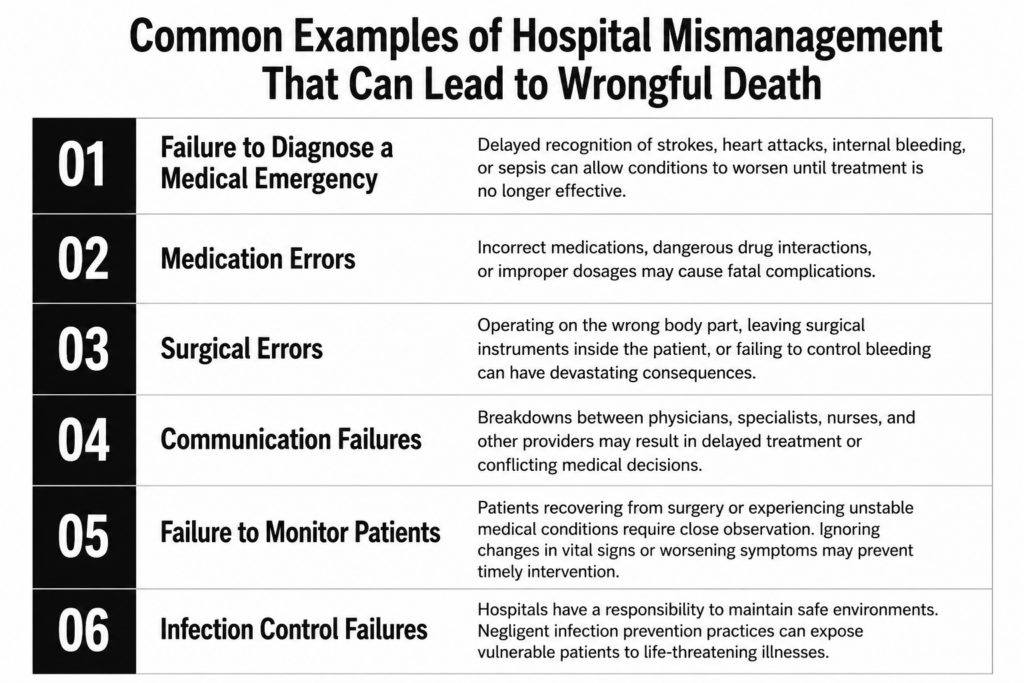
Common Examples of Hospital Mismanagement That Can Lead to Wrongful Death
Many wrongful death cases involve preventable failures that occur throughout a patient’s hospital stay.
Who Can File a Wrongful Death Claim in Arizona?
Arizona law limits who may bring a wrongful death claim under A.R.S. § 12-612.
Depending on the circumstances, eligible parties may include:
- A surviving spouse
- Children
- Parents
- The personal representative of the deceased person’s estate on behalf of eligible beneficiaries
Because eligibility depends on family relationships and specific legal requirements, it is important to understand who has the legal authority to pursue the claim.
Proving Hospital Negligence
Hospital cases are among the most complex personal injury claims because they often involve multiple healthcare providers and extensive medical records.
Building a strong case may require:
- Reviewing thousands of pages of medical records
- Consulting qualified medical experts
- Examining hospital policies and staffing practices
- Identifying communication failures
- Analyzing timelines of treatment
- Evaluating whether accepted medical standards were violated
Hospitals and their insurance companies typically have experienced legal teams defending these cases. Early investigation can help preserve evidence before important records or witness recollections become more difficult to obtain.
Why Technical Experience Matters
Medical negligence cases often involve highly technical medical evidence that must be explained clearly to insurance companies, judges, and juries.
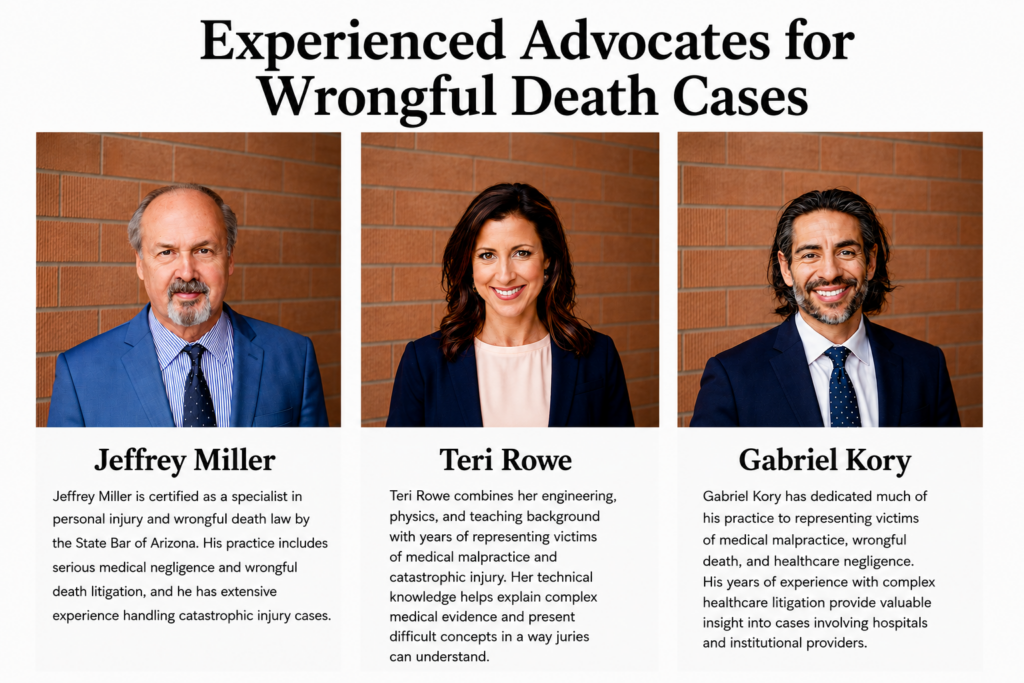
At Miller Kory Rowe, cases involving hospital negligence benefit from attorneys with complementary backgrounds.
When you trusted a hospital with your health or the life of someone you love, you deserved competent, attentive care. Your legal team should command that same level of trust. That’s why Miller Kory Rowe brings together attorneys whose unique backgrounds strengthen every aspect of your case.
What Compensation May Be Available?
Every case is different, but compensation in a successful wrongful death claim may include:
- Medical expenses incurred before death
- Funeral and burial costs
- Loss of future financial support
- Loss of companionship and guidance
- Emotional suffering experienced by surviving family members
The amount depends on many factors, including the circumstances of the death and the impact on surviving loved ones.
Frequently Asked Questions
Can I file both a medical malpractice and wrongful death claim?
Potentially. Many hospital negligence cases involve both types of claims. An attorney can determine which legal options apply based on the facts.
What if my loved one already had a serious illness?
Hospitals remain responsible for providing appropriate medical care, even when patients have complex or life-threatening conditions. A pre-existing illness does not automatically eliminate a claim.
How long do I have to file a claim in Arizona?
Arizona imposes deadlines for filing medical malpractice and wrongful death lawsuits. Missing these deadlines may prevent you from pursuing compensation, so speaking with an attorney promptly is important.
How do you prove the hospital caused the death?
Medical experts review the records to determine whether the hospital failed to meet accepted standards of care and whether those failures caused or significantly contributed to the patient’s death.
Does every hospital mistake qualify as wrongful death?
No. A poor medical outcome alone is not enough. There must be evidence that negligence caused or contributed to the patient’s death.
Take the First Step Toward Answers
Losing someone after hospital treatment leaves families searching for explanations, accountability, and peace of mind. While legal action cannot undo what happened, it can provide answers, financial relief, and an opportunity to hold negligent healthcare providers accountable.
If you believe hospital mismanagement contributed to your loved one’s death, speaking with an experienced Arizona medical malpractice attorney can help you understand your legal options and determine the most appropriate claim for your family’s circumstances.