
Brain injuries are one of the most common serious injuries in motorcycle accidents.
With nothing between you and the road, one hard impact can cause anything from a concussion to damage that lasts for years.
They don’t always show up right away, either. You might get up off the asphalt, tell the paramedics you’re fine, and have a friend pick up the bike.
Then the headaches start. Words you’ve used your whole life won’t come. Your partner says you snap over small things, and you can’t remember what you ate for breakfast.
That delay matters for your health and for any claim against the driver who hit you. If you’re dealing with a brain injury after a crash, the motorcycle injury lawyers at Miller Kory Rowe can explain how Arizona handles these claims and help you protect your recovery.
Why Motorcycle Crashes So Often Lead to Brain Injuries
A rider has no roof, no airbag, and no steel cage. When a driver turns left across your lane or drifts into you on the freeway, your body takes the full force, and your head often hits the pavement, the other vehicle, or both.
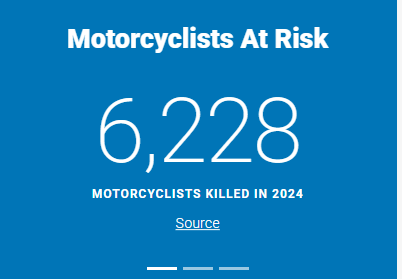
The numbers show how lopsided that risk is. In 2024, NHTSA reported 6,228 motorcyclists killed nationwide, and per mile traveled, riders were almost 27 times more likely than passenger car occupants to die in a crash.
Arizona feels that toll directly. The Arizona Department of Transportation’s 2024 Crash Facts report counted 219 motorcyclists killed and 2,503 injured on the state’s roads that year.
Many riders who survive are left with some form of traumatic brain injury (TBI). It can range from a concussion that clears in a few weeks to damage that changes how you think, work, and relate to the people around you.
The Signs Riders Miss in the First Few Days
Adrenaline masks a lot after a crash. You’re focused on the bike, the other driver, and the road rash on your arm.
According to the CDC’s guide to TBI signs and symptoms, some symptoms of a mild brain injury show up right away, while others don’t appear for hours or even days.
They usually fall into four groups:
- Physical: headaches, dizziness, nausea, blurry vision, sensitivity to light or noise
- Thinking: trouble remembering, focusing, or finding words; feeling foggy or slowed down
- Mood: irritability, anxiety, sadness, or emotions that feel bigger than usual
- Sleep: sleeping much more or much less than normal
Some signs mean you need emergency care right now.
A headache that keeps getting worse, repeated vomiting, a seizure, slurred speech, or one pupil larger than the other all call for 911.
The CDC also points out that people with a brain injury don’t always notice or admit their own symptoms. That’s why a spouse, roommate, or coworker is often the first to say, “You’re not acting like yourself.”
Why a Delayed Diagnosis Can Hurt Your Case
Insurance adjusters pay close attention to gaps in treatment. If you wait three weeks to see a doctor, they may argue that something other than the crash caused your symptoms.
You don’t need to have every answer right away. You do need a paper trail that connects the crash to what you’re feeling.
Here are a few things to take note that make a real difference:
- Get checked out quickly, and tell the doctor you hit your head, even if you wore a helmet
- Keep your helmet as it is, since cracks and scrapes can show how hard you landed
- Write down new symptoms as they appear, with dates
- Ask a family member to note changes they see in you
That record matters because brain injuries are often called “invisible.” Your broken wrist shows up on an X-ray. Memory problems and personality changes need other kinds of proof.
Arizona’s Helmet Law and What It Means for Your Claim
Arizona doesn’t require adult riders to wear a helmet. Under A.R.S. § 28-964, the helmet requirement applies to operators and passengers under 18.
So if you’re an adult who rode without one, you didn’t break the law, and you haven’t lost your right to file a claim. The driver who caused the crash is still responsible for causing it.
What the defense may do is argue comparative fault. Under A.R.S. § 12-2505, your damages can be reduced in proportion to your share of fault for the injury.
That argument has limits. The other side generally has to show that a helmet would have prevented or lessened your specific head injury. It doesn’t touch your other injuries, like a shattered ankle or a separated shoulder.
And wearing a helmet doesn’t make you immune. The CDC notes that helmets reduce the risk of head injury, but riders who wore one can still suffer a serious TBI, especially in a high-speed impact.
Motorcycle Helmet Laws by State
If you ride across state lines, the helmet rules can change the moment you cross the border. Arizona is one of 30 states with a partial law that only covers certain riders.
The breakdown below reflects the Insurance Institute for Highway Safety’s state helmet law table as of October 2026. Laws change, so check the current rules in any state before you ride there.
Universal Helmet Laws
Seventeen states and Washington, D.C., require every rider and passenger to wear a helmet, no matter their age or experience.
| State | Who Must Wear a Helmet |
|---|---|
| Alabama | All riders |
| California | All riders |
| District of Columbia | All riders |
| Georgia | All riders |
| Louisiana | All riders |
| Maryland | All riders |
| Massachusetts | All riders |
| Mississippi | All riders |
| Nevada | All riders |
| New Jersey | All riders |
| New York | All riders |
| North Carolina | All riders |
| Oregon | All riders |
| Tennessee | All riders |
| Vermont | All riders |
| Virginia | All riders |
| Washington | All riders |
| West Virginia | All riders |
Partial Helmet Laws
These 30 states require helmets for some riders, usually based on age. A few also cover new riders, permit holders, or adults who don’t meet insurance or training requirements.
| State | Who Must Wear a Helmet |
|---|---|
| Alaska | Riders under 18 |
| Arizona | Riders under 18 |
| Arkansas | Riders under 21 |
| Colorado | Riders and passengers under 18 |
| Connecticut | Riders under 21 |
| Delaware | Riders and passengers under 19; novice riders for their first two years |
| Florida | Riders under 21; riders 21 and older without required medical insurance |
| Hawaii | Riders under 18 |
| Idaho | Riders under 18 |
| Indiana | Riders under 18 |
| Kansas | Riders under 18 |
| Kentucky | Riders under 21; permit holders |
| Maine | Riders under 18; permit holders; first-year riders |
| Michigan | Riders under 21; riders 21 and older who don’t meet insurance and training requirements |
| Minnesota | Riders under 18; permit holders |
| Missouri | Riders under 26; riders 26 and older without health insurance |
| Montana | Riders under 18 |
| Nebraska | Riders under 21; riders 21 and older without a safety course certificate |
| New Mexico | Riders under 18 |
| North Dakota | Riders under 18 |
| Ohio | Riders under 18; first-year riders |
| Oklahoma | Riders under 18 |
| Pennsylvania | Riders under 21; riders in their first two years unless they’ve completed a safety course |
| Rhode Island | Riders under 21; all passengers; first-year riders |
| South Carolina | Riders under 21 |
| South Dakota | Riders under 18 |
| Texas | Riders under 21; riders 21 and older without a safety course or health insurance |
| Utah | Riders under 21 |
| Wisconsin | Riders under 18; permit holders |
| Wyoming | Riders under 18 |
No Helmet Laws
Three states have no motorcycle helmet requirement for any rider.
| State | Who Must Wear a Helmet |
|---|---|
| Illinois | No requirement |
| Iowa | No requirement |
| New Hampshire | No requirement |
How a missing helmet affects an injury claim depends on each state’s fault rules. In Arizona, it may reduce your head injury damages, but it doesn’t erase the other driver’s responsibility for causing the crash.
Who Can Be Held Responsible
Most motorcycle accident claims start with the driver who hit you, whether the crash happened on a Phoenix freeway or a Tucson street. But depending on what happened, other parties may share responsibility:
- An employer, if the driver was working at the time of the crash
- A city, county, or the state, if a road defect or missing signage played a role
- A manufacturer, if a defective helmet, tire, or brake part failed
- A second driver, if more than one vehicle contributed to the crash
Claims against government agencies come with much shorter deadlines. Under A.R.S. § 12-821.01, you generally have to file a formal notice of claim within 180 days. Under A.R.S. § 12-821, the lawsuit itself usually has to be filed within one year.
What a Motorcycle Brain Injury Claim Can Cover
A brain injury doesn’t just affect the weeks after a crash. It can change what your life looks like for years, and your claim should reflect that.
Depending on your situation, compensation may cover:
- Emergency care, imaging, neurologists, and hospital stays
- Speech, occupational, cognitive, and physical therapy, now and in the future
- Lost wages and the loss of your ability to earn what you did before
- Pain, emotional distress, and changes to your relationships and daily life
Arizona gives injured people an important protection here. Article 2, Section 31 of the Arizona Constitution bars any law that limits the amount of damages a person can recover for injury or death. Unlike many states, Arizona puts no cap on what a jury can award for pain and suffering.
When the injury is serious enough that you can’t return to work or live on your own, the claim often falls into the catastrophic injury category, where long-term care planning becomes a central part of the case.
“I’ve ridden dirt bikes my whole life, and it taught me how fast things can go wrong on two wheels. When a rider comes to us with a brain injury, I know how little stood between them and the ground.”
Gabriel V. Kory, Miller Kory Rowe
Arizona’s Deadline to File
Under A.R.S. § 12-542, you generally have two years from the date of the crash to file a personal injury lawsuit in Arizona.
Two years sounds like plenty. But TBI symptoms can take months to fully show themselves, and building a strong case means gathering medical records, expert opinions, and witness accounts while they’re still fresh.
If the crash was fatal, Arizona’s wrongful death laws give certain family members the right to bring a claim, and the two-year clock generally starts on the date of death.
The Bottom Line
A brain injury from a motorcycle crash can change your memory, your mood, your job, and your family’s day-to-day life. The symptoms don’t always show up right away, and insurers know how to use that delay against you.
Arizona law gives you real protections. Adults who rode without a helmet can still bring a claim, damages for injury aren’t capped, and you have two years to file in most cases. The key is getting medical care early and building a record that shows how your life has changed.
Arizona firms that handle serious injury claims, such as Miller Kory Rowe, often work with neurologists, rehab specialists, and life care planners to document the full long-term cost of a brain injury.
If you or someone you love is dealing with a brain injury after a motorcycle crash, call (602) 648-4045 for a free consultation.
Frequently Asked Questions
Q: Can I still file a claim in Arizona if I wasn’t wearing a helmet?
A: Yes. Adults aren’t legally required to wear a helmet in Arizona, riding without one doesn’t bar your claim. The other side may argue your head injury damages should be reduced, but they’d need to show a helmet would have made a difference.
Q: What if my brain injury symptoms didn’t show up until days later?
A: That’s common, and it doesn’t mean your injury isn’t real or isn’t connected to the crash. See a doctor as soon as you notice symptoms and explain that you were in a motorcycle accident so the link is documented.
Q: How do you prove a brain injury that doesn’t show up on a scan?
A: A normal CT scan doesn’t always rule out a brain injury. Doctors often rely on neurological exams, neuropsychological testing, and your own reports, and statements from family and coworkers about how you’ve changed can carry real weight.
Q: How long do I have to file a motorcycle accident claim in Arizona?
A: In most cases, two years from the date of the crash. If a government agency may be responsible, you’ll usually need to file a notice of claim within 180 days, which is why it helps to look into your options early.
Q: What happens if I was partly at fault for the crash?
A: Arizona uses pure comparative fault. You can still recover even if you share some of the blame, but your compensation is reduced by your percentage of fault.
Q: Should I talk to the other driver’s insurance company?
A: You can report the crash, but be careful with recorded statements. Brain injury symptoms often aren’t fully clear in the early days, and saying “I feel fine” can be used later to downplay a serious injury.