
A motorcycle crash takes seconds, but the choices you make afterward can protect you for years.
One second you’re riding. The next, you’re on the pavement trying to figure out what just happened.
Your bike is down, your body hurts in places you can’t name yet, and a driver is standing nearby saying they never saw you. It’s a lot to process, and nobody hands you a playbook.
This guide walks you through what to do after a motorcycle accident in Arizona, from the first few minutes at the scene to the deadlines that can quietly end a claim if you miss them.
Miller Kory Rowe’s Phoenix motorcycle accident attorneys handle these cases from the ground up, and the steps below reflect what actually protects a rider’s claim.
Why Motorcycle Crashes Hit Riders Harder
Riders don’t have doors, airbags, or a steel frame between them and the road.
That’s why a crash a car driver walks away from can leave a motorcyclist with broken bones, a spinal injury, or a brain injury.
The numbers in Arizona bear that out. According to the Arizona Department of Transportation’s 2025 crash data, 194 motorcyclists died on Arizona roads in 2025, out of 1,156 total traffic deaths.
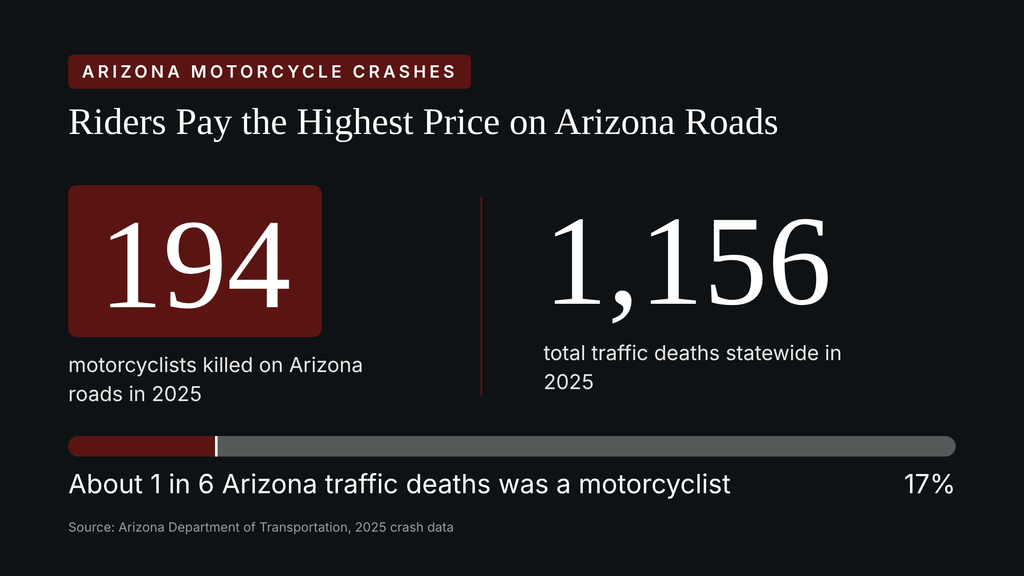
That’s roughly one in every six people killed, even though motorcycles make up a small share of vehicles on the road.
Because the stakes are this high, the steps you take in the hours and days after a crash matter more than most people realize.
Step 1: Get to Safety and Call 911
If you can move, get yourself out of traffic.
Don’t try to drag your bike off the road if it means putting yourself back in danger.
Then call 911. Arizona law requires any driver involved in a crash that injures or kills someone to report it right away to local police, the county sheriff, or the highway patrol under A.R.S. § 28-666.
The other driver also has duties. Under A.R.S. § 28-663, they have to give you their name, address, and vehicle registration number, show their license if you ask, and help get you medical care if you need it.
A police report gives you an official record made at the time of the crash. That record can carry a lot of weight later, especially if the driver’s story changes.
Step 2: Get Medical Care, Even If You Feel Okay
Adrenaline is powerful.
It can hide a concussion, internal bleeding, or a spinal injury for hours.
Let paramedics check you at the scene, and see a doctor within a day or two even if you turned down the ambulance.
Tell the doctor about every symptom, including headaches, numbness, dizziness, or pain that seems minor.
This protects your health first. It also creates a medical record that ties your injuries to the crash. When there’s a gap of days or weeks before treatment, insurance companies often argue something else caused your injuries.
Step 3: Document Everything You Can
If you’re able, use your phone before anything gets moved or cleaned up. If you can’t, ask a friend or family member to go back to the scene as soon as possible.
Try to capture:
- Photos of both vehicles, skid marks, debris, and road conditions
- Traffic signals, stop signs, or anything blocking a driver’s view
- Your visible injuries, including road rash and bruising
- Names and phone numbers of anyone who saw the crash
Also look around for cameras. Businesses, homes with doorbell cameras, and city traffic cameras may have caught the crash, but that footage often gets erased within days.
Write down what you remember as soon as you can. Details like the time, the direction everyone was traveling, and what the driver said fade faster than you’d expect.
Step 4: Keep Your Gear and Your Bike as They Are
Your helmet, jacket, gloves, and boots can show exactly where and how hard you hit. A cracked helmet or shredded jacket is physical proof of the force involved.
Don’t throw anything away or rush your bike into repairs. Store your gear somewhere safe and take photos of the damage.
The same goes for your motorcycle. Dents, scrapes, and the point of impact can help an accident reconstruction expert show who hit whom and how fast they were going.
Step 5: Be Careful What You Tell Insurance Adjusters
Expect a call from the other driver’s insurance company soon after the crash. The adjuster may sound friendly, but their job is to pay as little as possible on the claim.
You don’t have to give a recorded statement to the other driver’s insurer. Stick to basic facts, don’t guess about speed or distances, and don’t say you’re “fine” when you haven’t been fully checked out.
Be just as careful with quick settlement offers. Once you sign a release, you usually can’t reopen the claim, even if you later learn you need surgery.
How Arizona’s Fault Rules Affect Your Claim
Insurers often try to put some of the blame on the rider. Knowing how Arizona handles fault helps you push back.
You Can Recover Even If You Were Partly at Fault
Arizona uses pure comparative negligence under A.R.S. § 12-2505. If you were partly to blame, your compensation goes down by your share of fault, but your claim isn’t automatically thrown out.
So if a jury finds you 25% at fault, you can still recover 75% of your damages.
The Helmet Question
Under A.R.S. § 28-964, only riders and passengers under 18 have to wear a helmet.
Anyone operating a motorcycle must wear protective glasses, goggles, or a transparent face shield unless the bike has a windshield.
If you weren’t wearing a helmet, an insurer may argue it made your head injury worse. That argument shouldn’t affect injuries a helmet wouldn’t have prevented, like a broken leg or road rash.
Lane Filtering Is Legal, Within Limits
Arizona allows lane filtering, but only under the narrow conditions in A.R.S. § 28-903.
You can pass stopped vehicles on a two-wheeled motorcycle only on a road with at least two lanes going your direction, a speed limit of 45 mph or less, and while going no faster than 15 mph.
The same law also gives every motorcycle the right to the full use of a lane. A driver who crowds you or cuts into your lane is breaking the law.
Check What Insurance Is Actually Available
Arizona’s minimum liability coverage is $25,000 per person and $50,000 per accident for bodily injury under A.R.S. § 28-4009.
A serious motorcycle injury can blow past that in the first week of hospital care.
That’s where your own policy comes in. Under A.R.S. § 20-259.01, insurers have to offer uninsured and underinsured motorist coverage in writing, but you get to decide whether to buy it.
Pull up the declarations page on your motorcycle policy and any auto policy in your household. Uninsured, underinsured, and medical payments coverage can all help when the at-fault driver has little or no insurance, or drives away.
Don’t Let a Deadline Sneak Up on You
Most personal injury lawsuits in Arizona must be filed within two years of the crash under A.R.S. § 12-542.
If a rider dies, families generally have two years from the date of death.
The timeline is much shorter when a government entity is involved, like a city bus, a county vehicle, or a road defect the state should have fixed.
You must file a formal notice of claim within 180 days under A.R.S. § 12-821.01, and the lawsuit itself within one year under A.R.S. § 12-821.
Miss these dates and you can lose your right to compensation, no matter how strong your case is.
Keep Track of What This Crash Has Cost You
Start a folder, physical or digital, on day one. Save every medical bill, receipt, pay stub showing missed work, and repair estimate.
A short daily journal helps too. Note your pain levels, the things you can’t do anymore, and the nights you couldn’t sleep. These details help show the human side of your losses, not just the dollar amounts.
Arizona is one of the few states that protects your right to full compensation in its constitution. Article 2, Section 31 of the Arizona Constitution bars laws that cap the damages you can recover for injury or death.
When injuries are life-changing, like paralysis or a brain injury, a catastrophic injury claim may need to account for decades of future care and lost earnings.
If a crash takes a rider’s life, the family may have a wrongful death claim of their own.
Frequently Asked Questions
Q: Do I have to report a motorcycle accident in Arizona if no one was hurt?
The immediate police notice in A.R.S. § 28-666 applies to crashes that injure or kill someone. Even in a damage-only crash, you still have to exchange information with the other driver, and calling police is usually a smart move so there’s an official record.
Q: What if the driver who hit me says they never saw me?
“I didn’t see the motorcycle” is one of the most common things drivers say, and it isn’t a defense. Drivers have a duty to watch for motorcycles and to give them the full use of their lane. Witness statements, video, and the damage pattern on your bike can show what really happened.
Q: Will not wearing a helmet ruin my claim in Arizona?
No. Adults aren’t required to wear helmets in Arizona, so riding without one doesn’t bar your claim. The insurer may argue it should pay less for head injuries a helmet would have reduced, but it has to back that up with evidence.
Q: What if I was hit by an uninsured or hit-and-run driver?
Your own uninsured motorist coverage may pay for your injuries if you bought it. If no contact happened between your bike and the other vehicle, Arizona law requires corroborating evidence that the unidentified driver caused the crash, so witness information becomes even more important.
Q: How long does a motorcycle accident claim take in Arizona?
It depends on how badly you’re hurt and whether fault is disputed. Many claims don’t settle until you’ve finished treatment or reached a point where doctors can predict your future care, which gives a clearer picture of your full losses.
Q: Should I accept the first settlement offer?
Be cautious. Early offers often come before you know the full cost of your injuries. Once you sign a release, you typically give up the right to ask for more, even if your condition gets worse.
Bottom Line
The hours after a motorcycle crash are confusing, but a few steps protect you: call 911, get checked out, document the scene, hold onto your gear, and be careful with insurance adjusters.
Arizona law gives injured riders real protections, from comparative fault to the constitutional ban on damage caps. Those protections only help if you act before the deadlines run out.
At Miller Kory Rowe, we represent injured motorcyclists in Phoenix and across Arizona, can review the facts of a crash and explain the options available.
If you or someone you love was hurt in a motorcycle crash, call (602) 648-4045 for a free consultation.