
Losing someone you love is devastating. When that loss was caused by another person’s negligence or misconduct, the grief is often mixed with unanswered questions, anger, and uncertainty about what comes next.
You may be wondering whether what happened could have been prevented. You may also be worried about medical bills, funeral expenses, lost income, or how your family will move forward without the person you depended on.
If your loved one’s death happened because someone failed to act with reasonable care, Arizona law may allow your family to pursue a wrongful death claim. While no legal action can replace the person you’ve lost, it can provide financial security, accountability, and answers that help your family begin to heal.
What Is a Wrongful Death Claim?
A wrongful death claim is a civil lawsuit brought when someone’s negligent, reckless, or intentional actions cause another person’s death. Rather than focusing on criminal punishment, a wrongful death case seeks compensation for the surviving family members who have suffered because of that loss.
Wrongful death claims can arise from many situations, including:
- Car, truck, and motorcycle crashes
- Medical malpractice
- Nursing home abuse or neglect
- Construction site accidents
- Defective products
- Dangerous property conditions
- Workplace accidents
- Other preventable fatal injuries
The central question is often simple: Would your loved one likely still be alive if another person or company had acted responsibly?
How Do You Know If You Have a Case?
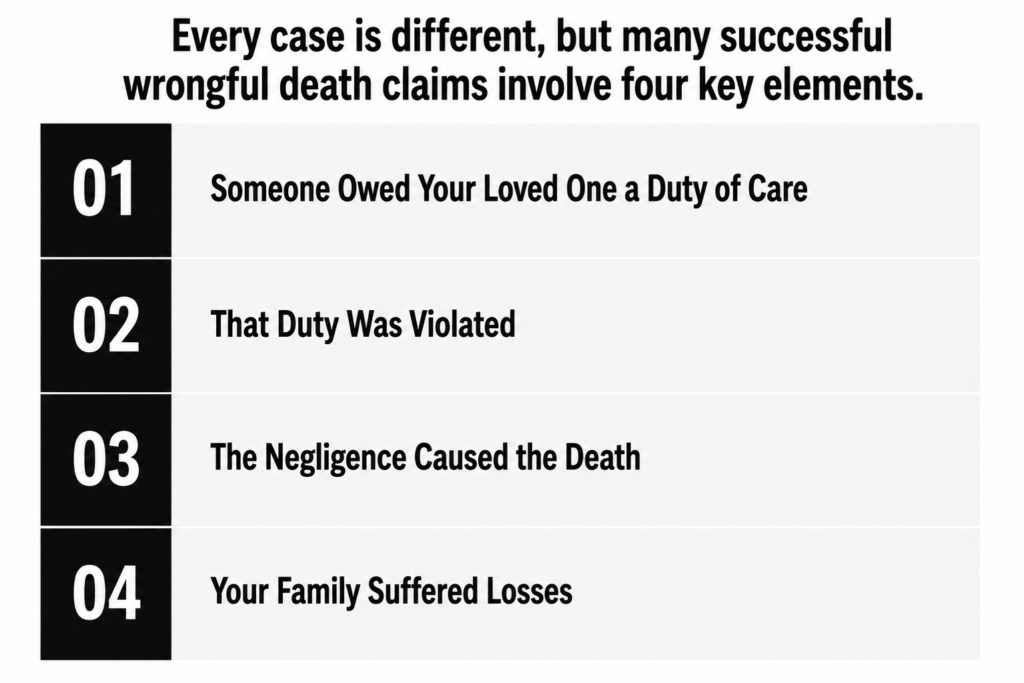
Someone Owed Your Loved One a Duty of Care
Individuals, healthcare providers, businesses, employers, and property owners all have legal responsibilities to act with reasonable care under certain circumstances.
Examples include:
- Drivers must follow traffic laws.
- Doctors must provide care that meets accepted medical standards.
- Nursing homes must protect residents from neglect and abuse.
- Construction companies must maintain reasonably safe job sites.
That Duty Was Violated
A wrongful death claim usually requires evidence that someone failed to meet their legal responsibility.
Examples include:
- Distracted or impaired driving
- Surgical mistakes
- Failure to diagnose a serious medical condition
- Inadequate supervision in a nursing facility
- Unsafe workplace practices
- Failure to repair dangerous property conditions
The Negligence Caused the Death
Not every mistake results in legal liability. Your legal team must show that the negligent conduct directly contributed to your loved one’s death.
This often requires careful investigation, medical records, accident reconstruction, expert testimony, and other evidence.
Your Family Suffered Losses
Wrongful death cases recognize that surviving family members experience both financial and emotional losses after an unexpected death.
These damages may include:
- Funeral and burial expenses
- Medical expenses before death
- Lost wages and future financial support
- Loss of companionship
- Loss of guidance and care
- Emotional suffering experienced by surviving family members
Common Situations That Lead to Wrongful Death Claims
Many Arizona families contact an attorney after incidents such as:
Fatal Motor Vehicle Accidents
High-speed crashes, distracted driving, drunk driving, commercial trucking collisions, and motorcycle accidents can all result in fatal injuries.
2024 Arizona Crash Statistics
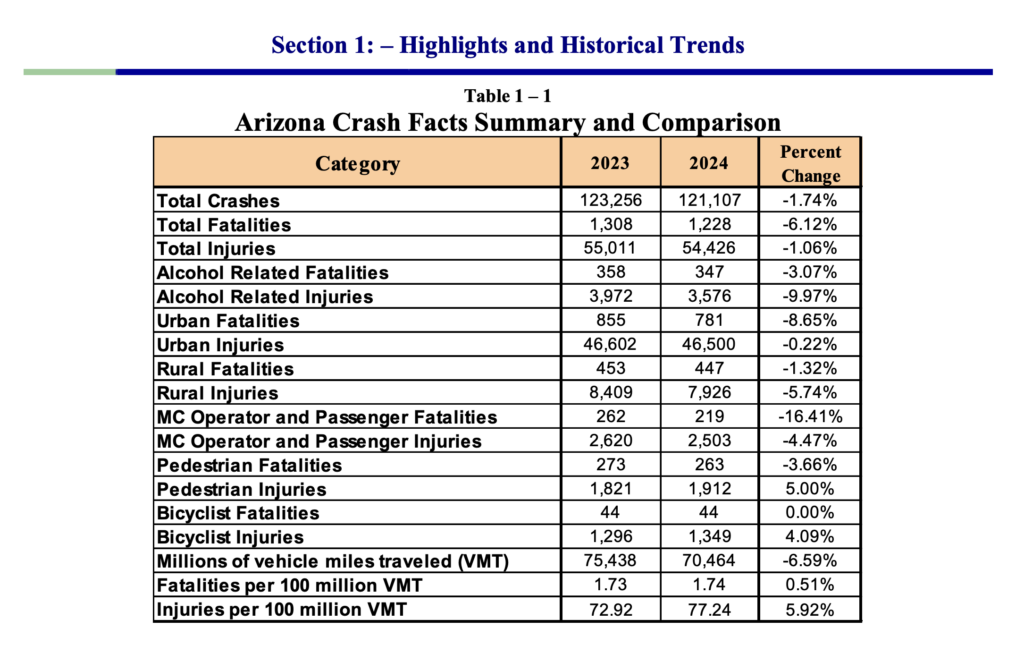
Death on the road is becoming an all-too-familiar reality for Arizona families.
In 2024, Arizona recorded 1,228 traffic fatalities, down 6.12% from 1,308 the year before, even as total crashes across the state dropped 1.74% to 121,107.
That still means roughly 3.36 people lost their lives on Arizona roads every single day, or one death every 7 hours and 9 minutes. Behind every one of those numbers is a family facing the same questions you may be facing now.
Medical Negligence
Doctors, hospitals, nurses, and other healthcare providers can make preventable errors that lead to death, including delayed diagnosis, medication mistakes, surgical errors, and birth injuries.
Nursing Home Abuse and Neglect
Families place tremendous trust in long-term care facilities. When neglect leads to dehydration, falls, infections, pressure injuries, or untreated medical conditions that become fatal, legal action may be appropriate.
Workplace and Construction Accidents
Falls from heights, equipment failures, electrocutions, and other serious workplace incidents can result in devastating losses for families.
Who Can File a Wrongful Death Claim in Arizona?
Arizona law limits who may bring a wrongful death claim under A.R.S. § 12-612.
Depending on the circumstances, eligible individuals may include:
- A surviving spouse
- A surviving child
- A surviving parent
- The personal representative of the deceased person’s estate on behalf of eligible beneficiaries
Determining who has the legal right to file can become more complicated in blended families or when multiple beneficiaries are involved. An attorney can help explain how Arizona law applies to your family’s situation.
How Compensation Can Help Your Family
No amount of money can replace someone you love.
Compensation is intended to ease the financial burdens caused by a preventable death and acknowledge the profound losses surviving family members experience.
Depending on the facts of the case, damages may include compensation for financial losses, emotional losses, and, in some cases, additional damages when particularly serious misconduct occurred.
Why Experience Matters in Wrongful Death Cases
Wrongful death litigation often involves complex medical evidence, technical investigations, insurance companies, and multiple expert witnesses.
When you trusted a hospital, nursing home, driver, employer, or other responsible party with your loved one’s safety, you deserved competent care and responsible conduct. Your legal team should command that same level of trust.
Miller Kory Rowe brings together attorneys with diverse backgrounds that strengthen complex wrongful death cases. Jeffrey Miller is certified as a specialist in personal injury and wrongful death law by the State Bar of Arizona and has extensive experience handling catastrophic injury and professional negligence claims. Gabriel Kory has spent much of his career representing families in elder abuse, neglect, wrongful death, and medical malpractice cases. Teri Rowe combines her engineering background with courtroom experience to explain complex accident mechanics and medical issues in a way that juries understand.
Their approach reflects the firm’s commitment to advocating for justice, protecting vulnerable people, and providing compassionate, client-centered representation for Arizona families.
Frequently Asked Questions
How long do I have to file a wrongful death lawsuit in Arizona?
Arizona law sets deadlines for filing wrongful death claims. Waiting too long could prevent your family from recovering compensation, so it is important to speak with an attorney as soon as possible.
Do we have a case if criminal charges were never filed?
Yes. A wrongful death lawsuit is separate from a criminal case. You may still have a valid civil claim even if no one was arrested or convicted.
What if my loved one was partially at fault?
Arizona’s comparative fault laws may still allow compensation, although the amount recovered could be reduced depending on the circumstances.
Will the case have to go to trial?
Many wrongful death claims are resolved through settlement. If a fair resolution cannot be reached, your legal team should be prepared to present your case in court.
How much does it cost to speak with a wrongful death attorney?
Many personal injury firms offer free consultations and handle wrongful death cases on a contingency fee basis, meaning attorney fees are typically paid only if compensation is recovered.
Take the First Step Toward Answers
You should not have to navigate legal questions while grieving the loss of someone you love.
If you believe another person’s negligence caused your family member’s death, speaking with an experienced Arizona wrongful death attorney can help you understand your legal rights, preserve important evidence, and determine whether your family has a claim.
A confidential consultation can provide the answers you need to make informed decisions during one of life’s most difficult moments.