
Understanding Pressure Ulcers That Developed While in a Nursing Home
A bedsore does not appear because someone is old.
It appears because someone was not moved, checked, or cared for when they should have been.
For families visiting a loved one in an Arizona nursing home and finding an open wound that nobody mentioned, that distinction matters enormously.
Bedsores, also called pressure ulcers or pressure injuries, are among the most visible signs of neglect in long-term care. They are painful, potentially life-threatening, and in most cases preventable. When they develop in a nursing home, the facility’s care practices are almost always part of the story.
What Are Bedsores?
Bedsores form when sustained pressure cuts off blood flow to skin and underlying tissue.
Without oxygen and nutrients, tissue begins to break down. The injury usually develops over bony areas of the body where skin sits close to bone: the tailbone, heels, hips, elbows, shoulders, and the back of the head.
The condition goes by several names. Clinicians may refer to it as a pressure ulcer, pressure injury, or decubitus ulcer. All describe the same underlying process: sustained compression causing tissue death.
Why Bedsores Are Almost Always Preventable
The medical and nursing communities widely regard pressure ulcers as largely preventable injuries when proper protocols are followed. Prevention requires consistency, not complexity.
Standard prevention measures include:
Repositioning: Residents who are bedridden should be turned at least every two hours. Wheelchair users should be repositioned at shorter intervals. When repositioning logs are incomplete or missing, it often indicates that this basic requirement was not met.
Skin assessments: Staff should regularly inspect residents for redness, warmth, or skin breakdown, particularly at pressure points. Early detection allows intervention before a wound opens.
Nutrition and hydration: Malnutrition and dehydration impair skin integrity and slow healing. Facilities have a duty to monitor and address both.
Specialized equipment: Pressure-relieving mattresses, cushions, and heel protectors are standard tools in pressure ulcer prevention. Their absence or improper use can accelerate injury.
For nursing home residents who spend long hours in bed or in a wheelchair and cannot reposition themselves independently, the risk is constant. That is why regular repositioning, skin checks, and attentive care are considered basic, non-negotiable elements of long-term care.
How Common Are Bedsores in Nursing Homes?
The scale of the problem is larger than most families realize. According to the Cleveland Clinic, approximately 2.5 million Americans develop bedsores each year, and more than 24,000 people worldwide die from complications related to pressure wounds annually.
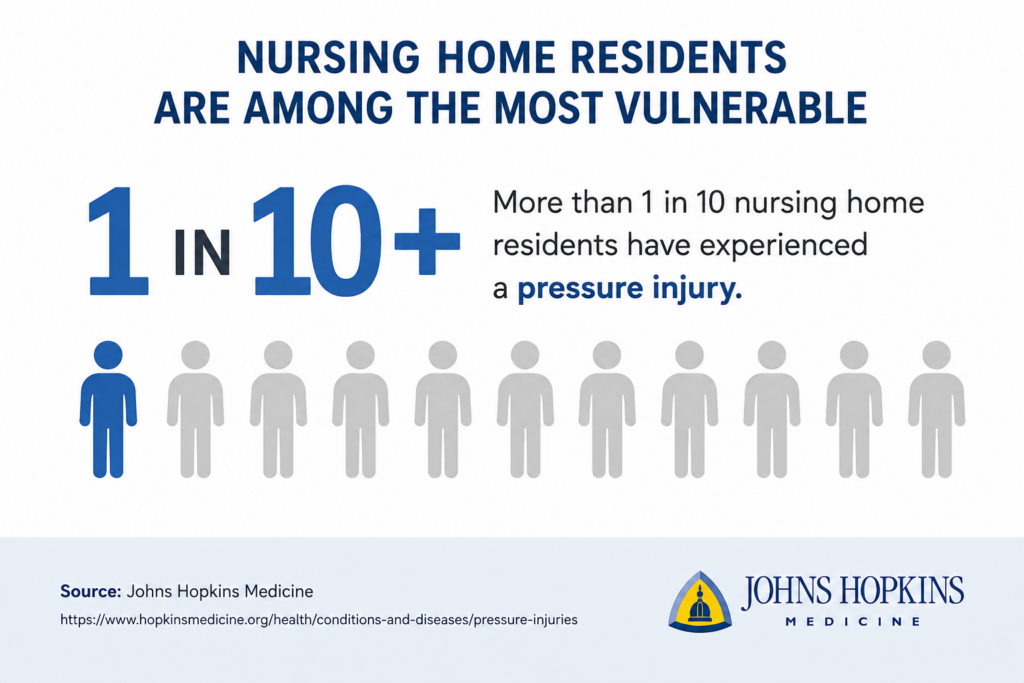
Nursing home residents are among the most vulnerable. Studies cited by Johns Hopkins Medicine show that more than 1 in 10 nursing home residents have experienced a pressure injury, a figure consistent with CDC data from the National Nursing Home Survey, which found that roughly 11% of nursing home residents had pressure ulcers of some stage.
A pressure wound can begin developing in as little as two hours after blood flow is interrupted, meaning a resident left in one position for a single overnight shift may already be sustaining tissue damage by morning.
The connection between malnutrition and bedsores is also well documented. CDC data shows that 1 in 5 nursing home residents with recent weight loss had pressure ulcers, reinforcing why nutritional monitoring is considered a core prevention responsibility.
Perhaps most telling is what happens after a wound develops. The same CDC survey found that only 35% of nursing home residents with stage 2 or higher pressure ulcers received specialized wound care services. That means nearly two-thirds of residents with open, worsening wounds were not receiving the targeted treatment their condition required.
The Four Stages of Bedsores
Healthcare providers classify pressure ulcers by stage, based on the depth of tissue damage. The stage tells a story about how long the wound was developing and whether care was being provided along the way.
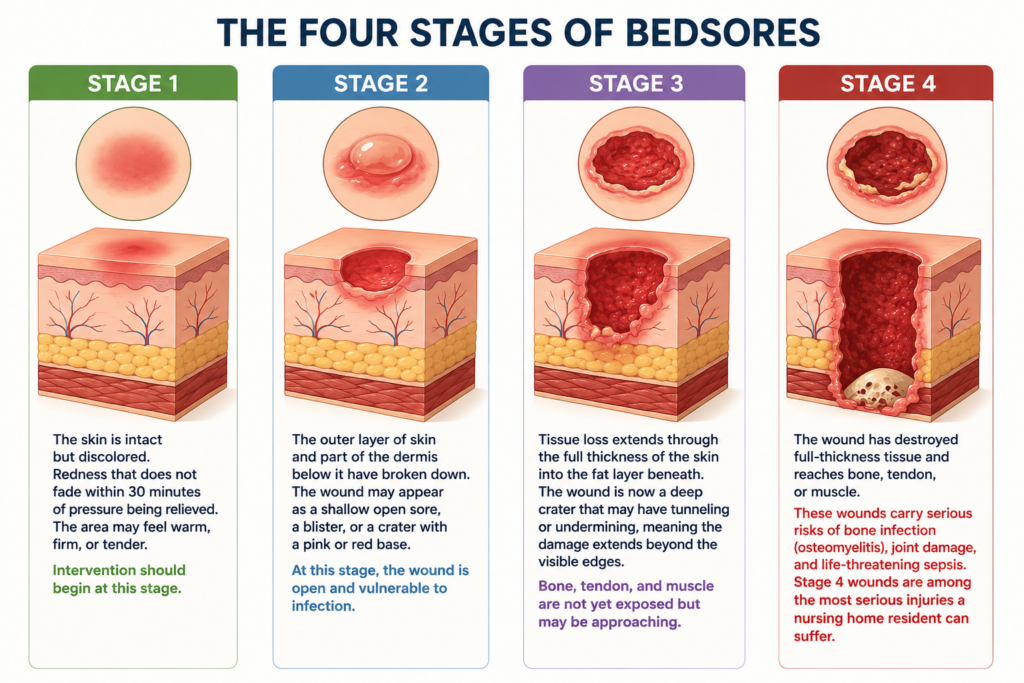
A Stage 3 or Stage 4 wound does not develop overnight. Its presence in a nursing home resident is almost always evidence that care was inadequate over a sustained period.
Serious Complications of Untreated Bedsores
Families are sometimes told a bedsore is “just a skin issue.” That framing understates the risk. Advanced or neglected pressure ulcers can lead to complications that are life-threatening.
- Sepsis: A bedsore infection can spread to the bloodstream, leading to life-threatening organ failure if not treated quickly.
- Osteomyelitis: Bacteria can reach the bone, causing a serious infection that may require surgery or long-term antibiotics.
- Cellulitis: The infection can spread through the surrounding skin and soft tissue, becoming increasingly dangerous.
- Gangrene: Severe tissue death may develop, sometimes making amputation necessary to stop the infection from spreading.
- Squamous Cell Carcinoma: Long-standing, non-healing pressure wounds can increase the risk of an aggressive form of skin cancer.
Early treatment can often prevent these complications, but delayed or inadequate care can have life-threatening consequences.
When Bedsores Are Evidence of Nursing Home Neglect
Not every pressure ulcer results from neglect.
Some residents arrive at a facility with wounds already present. Others have medical conditions that make healing extremely difficult. Context matters.
That said, certain findings point strongly toward facility fault:
A wound that progressed through multiple stages while the resident was in the facility’s care suggests repeated failures in monitoring and treatment. A wound that was never documented in care records suggests it was missed or ignored. Staff who deny the wound exists, or who attribute it to the resident’s age or health, may be deflecting responsibility. A facility with a history of pressure ulcer deficiencies on CMS inspection reports has a documented pattern.
CMS considers pressure ulcer rates a key quality indicator and publishes facility-level data publicly. Families can search any licensed Arizona nursing home on the Medicare Care Compare tool to review inspection history and quality ratings.
Bedsores that develop or worsen under a facility’s care are also frequently associated with other forms of nursing home abuse and neglect, including poor nutrition, dehydration, inadequate hygiene, and insufficient staffing. These patterns often appear together, and when they do, the picture of systemic neglect becomes clearer.
What Families Should Do If They Notice a Bedsore
Discovering that a loved one has a pressure ulcer can be alarming. Acting quickly and carefully protects both the resident and any future legal claim.
Document the wound immediately. Take photographs of the bedsore, noting the date. If possible, photograph the surrounding area to capture context. Document the resident’s overall condition and any visible signs of neglect, including soiled bedding, skin that appears unwashed, or signs of weight loss.
Request the medical record. Ask the facility for the resident’s skin assessment logs, care plan, and wound documentation. In Arizona, residents and their authorized representatives have the right to access these records. Gaps in repositioning logs or missing wound assessments are significant.
Report to the appropriate agency. Suspected neglect can be reported to Arizona Adult Protective Services at (877) 767-2385 and to the Arizona Department of Health Services, which licenses and inspects nursing care facilities. Reporting creates an official record and may trigger an investigation.
Seek medical evaluation. A physician or wound care specialist outside the facility can provide an independent assessment of the wound’s stage, likely timeline of development, and appropriateness of care received. For residents with dementia, signs of abuse and neglect can be especially difficult to detect, making outside evaluation even more important.
Consult a nursing home neglect attorney. An experienced attorney can identify the relevant parties, evaluate the facility’s care records, and advise whether the facts support a legal claim. Most nursing home neglect attorneys, including Miller Kory Rowe, offer free initial consultations and handle cases on a contingency basis.
How Miller Kory Rowe Handles Bedsore Cases
Miller Kory Rowe, LLP is a Board Certified Specialist in Personal Injury and Wrongful Death law with offices in Phoenix, Tucson, and Globe. The firm represents Arizona families whose loved ones have suffered serious harm in nursing homes and other long-term care settings, including cases involving pressure ulcers, sepsis, malnutrition, and wrongful death.
MKR’s nursing home abuse practice covers the full spectrum of care-related injuries. The firm’s attorneys are familiar with Arizona’s elder care statutes, the regulatory framework governing licensed facilities, and the record-based evidence that nursing home cases require.
Families who believe their loved one developed a bedsore due to facility neglect can speak with the firm’s team through a free and confidential consultation. No fee is charged unless the case results in a recovery.
Tucson families and Phoenix families can reach MKR through the firm’s dedicated bedsore pages. Cases from across Arizona, including Globe and surrounding communities, are also accepted.
Contact Miller Kory Rowe LLP
If a loved one has suffered bedsores in an Arizona nursing home, Miller Kory Rowe is available to help you understand your options. Call 602-648-4045 (Phoenix) or 520-372-6400 (Tucson) to schedule a free consultation, or visit mkrfirm.com to submit a confidential inquiry. There is no cost unless we win.